Sciatica vs. Pinched Nerve vs. Herniated Disc: How to Tell What’s Actually Causing Your Leg Pain
If you've been Googling your back and leg pain, you've probably run into three terms that are used interchangeably and shouldn't be: sciatica, pinched nerve, and herniated disc. They get conflated constantly. Even in medical settings, people use them sloppily.
The problem is that the cause of leg pain matters a lot for the treatment. A herniated disc and a true peripheral nerve entrapment have completely different rehab paths, and what helps one can make the other worse.
I'm Dr. Sean Harris, a Doctor of Physical Therapy and PhD in rehabilitation science with board certification in orthopedics. I've spent years building clinical decision frameworks for this exact problem because it's where most people get misdiagnosed. Here's how to think clearly about your leg pain, in plain language.
The terms, defined properly
Sciatica isn't a diagnosis. It's a symptom. The word means "pain along the path of the sciatic nerve" — typically a sharp, shooting, electric pain that runs from your low back or buttock down the back of your leg, sometimes past the knee, sometimes into the foot. Any condition that irritates the sciatic nerve or the nerve roots that form it can cause sciatica.
A pinched nerve is informal shorthand for any condition where a nerve is mechanically compressed. It can happen at the spine (where the nerve root exits) or anywhere along the path of a peripheral nerve. "Pinched nerve" is so vague it's almost useless as a diagnosis.
A herniated disc is a specific structural finding: the soft inner material of an intervertebral disc has pushed through the tougher outer ring. Sometimes it pushes far enough to contact a nerve root, sometimes not. A herniated disc on MRI is not the same as a herniated disc causing your symptoms — about 30% of pain-free adults have a herniated disc on MRI right now.
So the right way to think about it: sciatica is what you're experiencing. Pinched nerve is one possible cause. Herniated disc is one possible cause of the pinch.
What's actually happening when leg pain comes from your back
Most leg pain that originates from the back is one of these three things:
1. True radiculopathy (nerve root irritation)
A nerve root exiting the spine is being irritated — either mechanically compressed (often by a disc bulge or herniation, sometimes by bony arthritis) or chemically inflamed (typically right after a disc tear, before any structural compression).
Symptoms tend to be:
Sharp, shooting, electric pain that travels in a recognizable line down the leg
Often follows a specific pattern (the path of one nerve)
May include numbness or tingling in a specific area (not just "all over my leg")
May include weakness in specific muscles (foot drop, calf weakness, hip flexion weakness)
Often worse with certain positions (sitting, bending forward, sneezing/coughing)
2. Referred pain (no nerve compression at all)
The back itself is irritated, and the nervous system refers the pain into the leg without any actual nerve being compressed. This is extremely common and often gets misdiagnosed as sciatica.
Symptoms tend to be:
Achy, deep pain in the buttock or upper thigh
Doesn't follow a clean nerve path
Doesn't include numbness, tingling, or weakness
Often improves with the same things that help the back: movement, position changes, gentle loading
3. Peripheral nerve entrapment (not from the back at all)
A nerve is being compressed somewhere along its path, not at the spine. Examples:
Piriformis syndrome (sciatic nerve compressed by a tight piriformis in the buttock)
Common peroneal nerve compression at the knee (causes foot drop and outer leg/foot numbness)
Tarsal tunnel (compression near the ankle, causes burning in the bottom of the foot)
Meralgia paresthetica (nerve compression at the front of the hip, causes burning in the front of the thigh)
This is peripheral neuropathy — a different category entirely from radiculopathy. The treatments are different. The exam findings are different. And confusing one for the other is one of the most common errors I see in patients who've been to multiple providers without getting better.
How to tell which one you have
Here's the simplified version of the framework I use in my clinic. Real-life cases are more nuanced, but this will get you most of the way:
The key tell for peripheral entrapment vs. radiculopathy: peripheral entrapments are usually worse with certain limb positions (crossing your legs, sitting on a specific hip, prolonged ankle/knee positions) and not changed much by what you do with your spine. Radiculopathies usually flare or improve based on what your spine is doing, not what your hip or knee is doing.
The key tell for radiculopathy vs. referred pain: radiculopathy follows a specific nerve path with neurological signs (numbness, tingling, weakness in a specific pattern). Referred pain is diffuse, achy, and doesn't include those neurological signs.
What about MRI?
This is the big question patients ask. Here's the honest answer:
MRI is excellent at showing structure. It is terrible at showing what's causing your symptoms.
In the general population:
30%+ of adults have a herniated disc on MRI with zero pain
50%+ of adults have a disc bulge on MRI with zero pain
Degenerative changes are nearly universal after age 40
So when someone comes in with leg pain and a recent MRI showing a herniated disc, the disc is correlated with the symptoms but might not be the cause. The clinical exam — provocation tests, neurological tests, movement assessment — is what determines whether the structure on the MRI is actually responsible for what you're feeling.
This is why the order matters: clinical exam first, MRI later if it changes the plan. Getting an MRI before being examined often leads to chasing structural findings that aren't the actual problem.
Treatment paths
Each of the three categories has a different recovery approach:
Radiculopathy (nerve root compression): Specific positional loading (often "directional preference" exercises that take the disc material away from the nerve), gradual loading of the back, sometimes traction, sometimes manual therapy. Patience — even significant herniations resolve in most people over weeks to months without surgery. Surgery is reserved for cases with progressive weakness, cauda equina symptoms, or pain that doesn't improve after a real conservative trial.
Referred pain: Often responds quickly to movement-based treatment. Same general approach as treating the back itself. Doesn't require any specific nerve-glide work.
Peripheral entrapment: Treatment depends entirely on which nerve and where it's compressed. Often involves soft tissue work at the compression site, neural mobilizations (nerve glides), and posture/movement changes to take pressure off the nerve. Spinal manipulation and back exercises usually don't help — this is why these cases get stuck when treated as if they're sciatica.
When to get evaluated
You should see a spine-focused provider promptly if:
The pain is getting progressively worse
You have new weakness (especially foot drop or knee buckling)
You have numbness in the saddle area, bladder/bowel changes — go to ER immediately
It's been more than 4 weeks with no improvement
You can't sit, stand, or sleep comfortably
You can probably manage it yourself initially (gentle movement, position changes, time) if it's been less than a few days, pain is moderate and intermittent, no neurological signs (weakness, numbness in a specific pattern), and you're improving day to day.
The bottom line
Leg pain coming from your back is usually one of three things: a nerve root being irritated, referred pain from the back itself, or a peripheral nerve being entrapped somewhere along its path. They look similar from the patient's chair. They are very different from a treatment standpoint.
Getting the right diagnosis early is the difference between resolving this in weeks versus chasing the wrong treatment for months. A thorough exam by someone who actually knows how to differentiate these — without immediately defaulting to an MRI — is what changes the trajectory.
If you're trying to figure out what's actually going on with your leg pain, we offer a free 15-minute screening call. You'll talk to me, describe your symptoms, and I'll tell you what I'm hearing — what it sounds like, what kind of evaluation would help, and what your next step probably is. No commitment, no upsell.
Schedule a free screening call
You don't need to live with this, and you don't need months of trial-and-error treatment. You need someone to figure out which of these three it actually is, and build the right plan around that.
Dr. Sean Harris, PT, DPT, PhD, OCS, FAAOMPT, is the founder of Harris Institute for Rehabilitative Therapies in Houston, TX. He specializes in differential diagnosis of spine, hip, and peripheral nerve conditions.
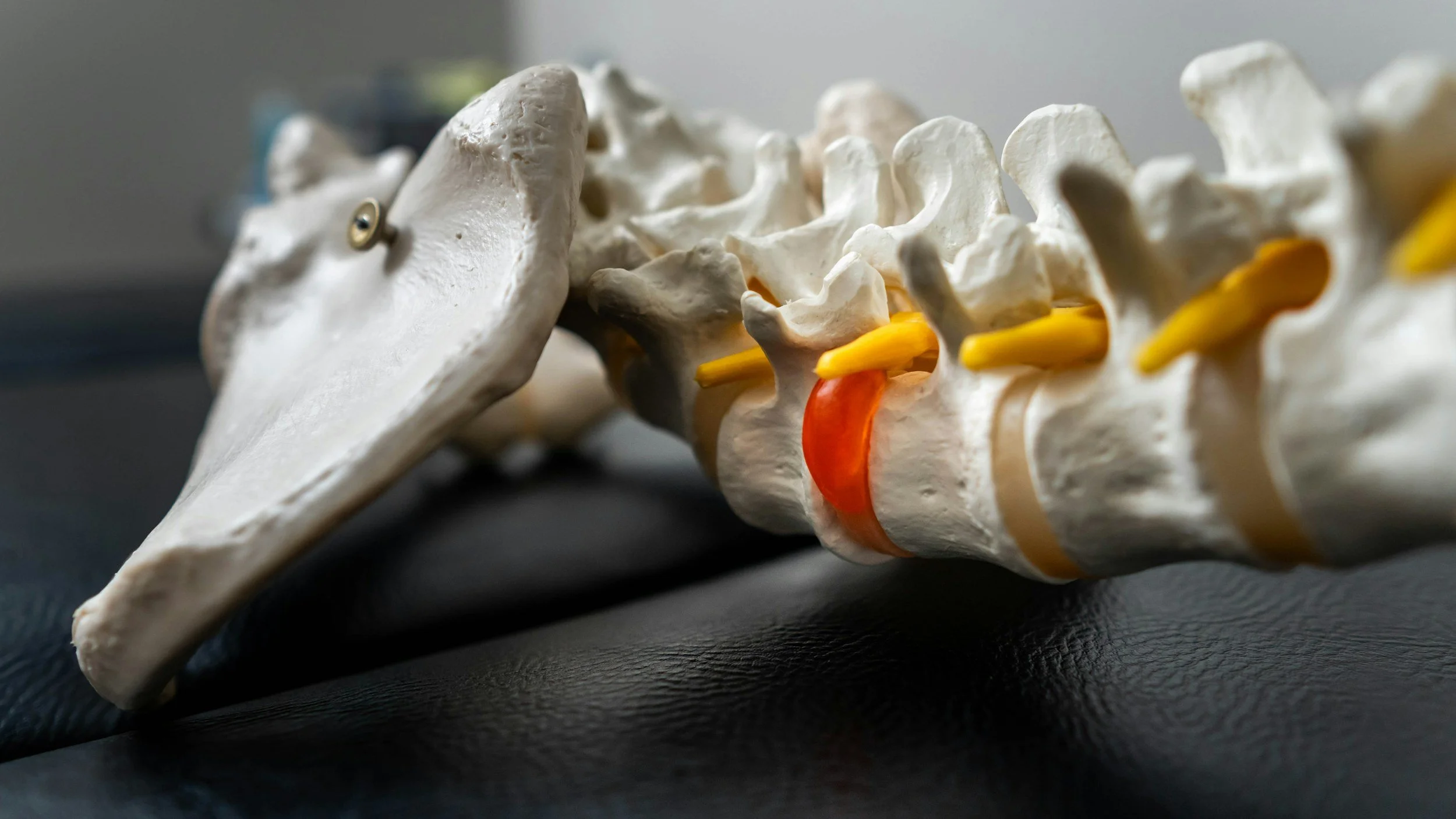
Spinal nerve roots are (shown here) are involved with radiculopathy and radicular pain
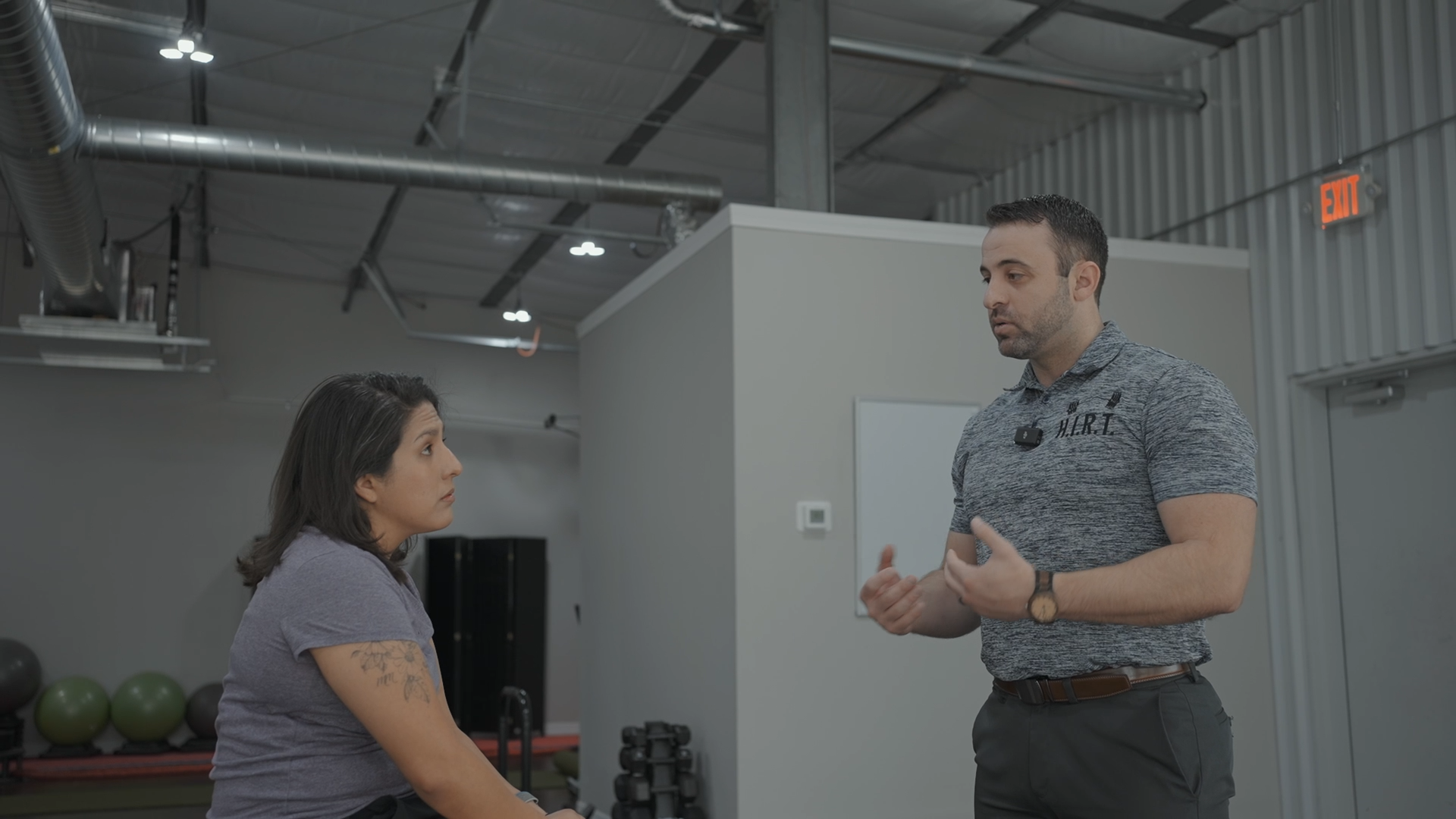
At the Harris Institute - we evaluate the differences between these nerve pathologies!