Arthritis and Pain
Why “Bone-on-Bone” Doesn’t Always Cause pain
Does Arthritis Always Cause Pain?
Many patients are told they have “bone-on-bone arthritis”, often followed by discussions about joint replacement surgery.
But here’s something surprising:
Arthritis severity on imaging often has very little correlation with pain.
This means people can have severe arthritis and little pain, or mild arthritis and significant pain.
Understanding why requires looking at how arthritis is measured.
How Doctors Measure Arthritis
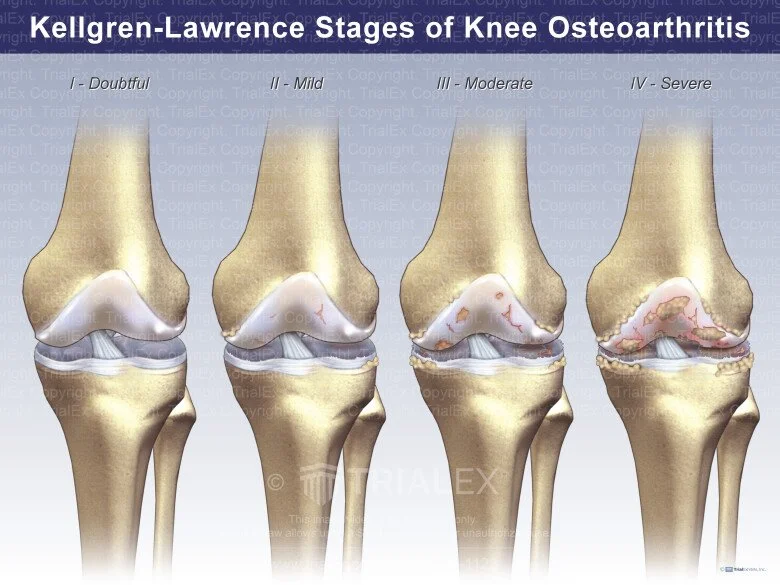
Osteoarthritis is commonly graded using the Kellgren-Lawrence scale, which ranges from 0 to 4.
Grade 0: No arthritis
Grade 1: Mild changes
Grade 2: Moderate arthritis
Grade 3: Advanced arthritis
Grade 4: Severe arthritis
Logically, you might assume higher grades equal worse symptoms.
But research shows this relationship is inconsistent.
Why Arthritis Pain Varies So Much
Pain is influenced by several factors beyond joint damage.
1. Structural Pathology
Joint damage does contribute to symptoms, but it is only one piece of the puzzle.
2. Genetics
Individuals have different levels of pain sensitivity due to differences in pain receptor activity and nervous system processing.
3. Habituation and Adaptation
The body adapts to repeated stress.
Gradual exposure to movement and loading often reduces pain over time through habituation.
This is one reason exercise therapy works well for arthritis management.
4. Context and Pain Perception
Pain is strongly influenced by:
Stress
Past injuries
Expectations
Fear of movement
Social context
These factors affect how the brain interprets sensory signals.

When Is Joint Replacement Actually Needed?
Pain alone is not always the best reason for surgery.
Joint replacement is more commonly recommended when patients experience:
Severe loss of joint motion
Mechanical locking
Major functional limitations
Failure of conservative treatment
Many patients successfully manage arthritis with:
Strength training
Mobility exercises
Activity modification
Weight management
The Bottom Line
Arthritis on an X-ray does not always explain pain.
Pain is influenced by biological, neurological, and contextual factors.
Understanding this helps patients avoid unnecessary fear and focus on treatments that actually improve function and quality of life.
need help managing your arthritis Pain?
Schedule your evaluation with one of our expert Physical Therapists to get started!
ABOUT H.I.R.T.

We are passionate about helping you move and feel your best. Whether you’re just out of surgery or dealing with a nagging injury, our dedicated physical therapists perform detailed evaluations to be identify the exact cause of your pain.
Through personalized programs and care specific to your needs, at H.I.R.T. your recovery is our focus and we’ll do everything to get you back to what you love.